Lifespan vs. Healthspan: Why Living Longer Isn’t the Goal—Living Better Is
For most of modern history, the primary goal of health care and fitness was simple: don’t die early. And by that standard, we’ve been incredibly successful. Advances in medicine, sanitation, and emergency care have dramatically increased the average lifespan over the past century.
But there’s a growing problem hiding in that success.
We’re living longer—but we’re not necessarily living better.
Many people now spend the final 10–20 years of life managing chronic disease, mobility limitations, medications, pain, and a gradual loss of independence. This is why the distinction between lifespan and healthspan matters more than ever.
Lifespan is simply the total number of years you’re alive. If you live to 85, your lifespan is 85 years. Lifespan doesn’t care whether those years are active or sedentary, independent or dependent, vibrant or painful—it’s just a number.
Healthspan, on the other hand, is the number of years you live well.
Healthspan is defined by your ability to move without pain, get up off the floor, carry groceries, travel confidently, play with grandkids, maintain independence, and feel capable and clear-minded in your body. Healthspan isn’t about avoiding death—it’s about avoiding disability, frailty, and dependence for as long as possible.
In simple terms, healthspan is how long you can do the things you love, without help.
The Healthspan Gap: Where Most People Struggle
The modern problem isn’t that people are dying too young. The problem is the growing gap between lifespan and healthspan.
For many adults, the final decades of life are marked by progressive decline—loss of muscle and strength, poor cardiovascular endurance, balance issues and falls, insulin resistance and metabolic disease, and fear-based avoidance of physical activity. Over time, this leads to increasing dependence on others.
This gap doesn’t happen overnight. It’s built quietly over decades, often beginning in our 40s and 50s.
The biggest drivers of this decline are:
- Loss of muscle and strength
- Declining cardiovascular endurance
- Poor stability and balance
That’s why fitness designed to improve healthspan must address three key components: strength training, cardiovascular endurance (VO₂ max), and stability/balance.
If we want the greatest return on investment, all three matter—but if we had to choose just one, strength training would be the top priority.
Strength Training: The Foundation of Healthspan
If healthspan had a foundation, strength training would be it.
Not cardio alone (though important).
Not stretching by itself.
And not just “staying active” through walking, golf, or pickleball.
After age 30, adults lose approximately 3–8% of muscle mass per decade, with the rate accelerating after age 50. This process—known as sarcopenia—is strongly linked to falls and fractures, slower metabolism, poor glucose control, loss of independence, and increased mortality risk.
Strength training directly slows, stops, and can even reverse this process.
How strong you are determines whether you can get up from a chair or the floor, catch yourself if you trip, carry awkward or heavy objects, maintain posture and spinal integrity, and protect your joints as you age. Research consistently shows that higher strength levels are associated with lower all-cause mortality, independent of body weight or cardiovascular fitness.
Strength training isn’t about looking fit after 40—it’s about staying mobile, capable, and independent for life.
Strength training also plays a powerful role in disease prevention. It improves insulin sensitivity and glucose uptake in type 2 diabetes, builds and preserves bone density to combat osteoporosis, improves blood pressure and lipid profiles for heart health, supports brain health and cognitive function, and strengthens the tissues that protect joints in arthritis.
This is why longevity experts emphasize strength training as a core pillar of longevity alongside aerobic fitness, stability, and metabolic health.
VO₂ Max: Cardiovascular Fitness for Healthspan
If strength determines whether you can move, VO₂ max determines how long you can keep moving.
VO₂ max is a measure of your body’s ability to take in oxygen, deliver it through the heart and blood vessels, and use it at the muscle level to produce energy. In simple terms, it reflects how efficiently your heart, lungs, and muscles work together. It is considered the gold-standard marker of cardiorespiratory fitness.
VO₂ max naturally declines with age—about 10% per decade if left untrained. This decline is strongly associated with higher risk of heart disease, poor metabolic health, reduced resilience to illness, loss of stamina for daily life, and increased all-cause mortality.
Low VO₂ max doesn’t just mean “bad cardio.” It shows up as getting winded walking uphill, struggling to keep up while traveling, longer recovery from illness or surgery, and having less physiological reserve when life throws stress at your body.
Research consistently shows that higher VO₂ max is one of the strongest predictors of longevity and survival, often outperforming traditional risk factors like cholesterol or BMI.
For true healthspan fitness, the goal is not choosing between lifting weights or doing cardio—it’s training both, intelligently. Strength training preserves structure, stability, and independence, while VO₂ max training preserves stamina, resilience, and cardiovascular capacity. Together, they allow you to stay active longer, recover faster, resist disease, and maintain confidence in your body as you age.
The real question isn’t, “Can I still work out?”
It’s, “Can my body handle the demands of life 10, 20, or 30 years from now?”
Stability and Balance: The Silent Protector of Healthspan
Strength and VO₂ max often get the spotlight, but stability and balance may be the most underestimated contributors to healthspan—because balance isn’t something most people think about until they lose it.
Stability is your body’s ability to control movement, maintain joint integrity, transfer force safely, and react to unexpected challenges. Balance is your ability to maintain control over your center of mass, adjust to changes in position, and prevent falls when your environment or body shifts. Together, they reflect how well your nervous system, muscles, joints, and sensory systems work as a team.
Balance naturally declines with age due to loss of muscle strength, reduced body awareness, slower reaction time, changes in vision and the inner ear, and joint stiffness or pain. The consequences are significant. Falls are the leading cause of injury-related death in adults over 65 and a major driver of fractures, loss of independence, fear-based movement avoidance, and rapid physical decline after injury.
The key point is this: falls are not an inevitable part of aging—they’re largely a training issue.
Stability and balance allow strength and cardio to be used safely. They protect joints during loaded movements, allow safe deceleration and direction changes, reduce compensations that lead to pain, and build confidence in daily movement. Without stability, stronger muscles can actually increase injury risk. Without balance, better endurance doesn’t prevent falls.
Stability is the bridge between fitness and real-world function.
The Bottom Line
Strength training keeps you capable.
VO₂ max keeps you resilient.
Stability and balance keep you safe.
If you want to stay independent, move with confidence, reduce disease risk, and age with capability instead of fragility, training for your healthspan isn’t optional—it’s essential.
Because the real goal isn’t just adding years to your life.
It’s adding life to your years.
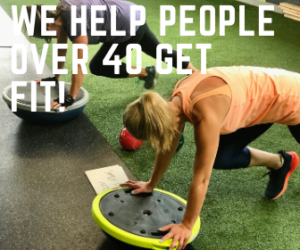
Get Started With Your 6-Week Trial Membership Today!
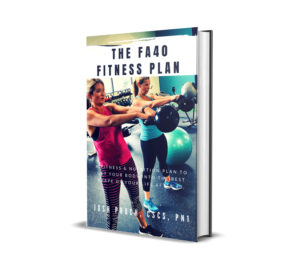
Download our FREE eBook “The FA40 Fitness Plan” TODAY!